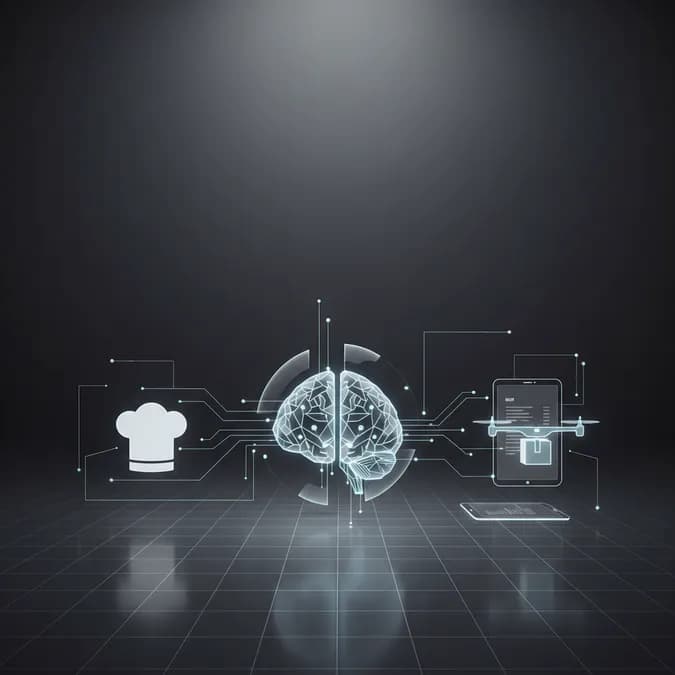
The 2026 restaurant trends are reshaping the industry with a projected $1.55 trillion in nationwide sales. This growth is driven by AI technology, precision preparation strategies, and experiential dining experiences that keep guests engaged and operations profitable.
Operators across the country are navigating a complex landscape where technology investments have become essential rather than optional. AI-enhanced kitchen technology, including smart sensors for freshness tracking, predictive ordering systems, and menu analytics, are helping restaurants reduce waste, improve efficiency, and combat margin pressures. Simultaneously, the industry is doubling down on guest connections through hyper-local, experiential dining experiences—from pop-ups and chef collaborations to personalized menus—blending authenticity with digital innovation.
The 2026 restaurant landscape reveals clear generational divides in dining preferences, with younger consumers seeking novelty through delivery channels while older diners prioritize value. This complexity requires operators to balance automation with human touch, efficiency with experience, and cost management with quality. Understanding these trends is crucial for anyone invested in the food industry, whether as a consumer, operator, or industry observer.
Projected Sales and Growth in 2026
The National Restaurant Association projects the restaurant industry will reach $1.55 trillion in sales for 2026, representing a significant milestone for the sector. This projection reflects 1.3% real growth, indicating steady expansion despite economic headwinds. The growth

According to OpenTable's 2026 Dining Trends Report, 55% of Americans plan to spend more on dining out in 2026, signaling strong consumer confidence in the category. Additionally, dining out has increased 8% year-over-year, demonstrating sustained momentum in the sector. This growth trajectory suggests that despite inflation and cost pressures, consumers remain committed to restaurant experiences.
The employment landscape is equally robust, with the restaurant industry projected to employ 15.8 million workers in 2026, including 100,000 new jobs. This expansion reflects operator confidence in growth and the need for additional workforce capacity to meet demand. The combination of sales growth, consumer spending increases, and job creation positions the restaurant industry as a significant economic driver heading into 2026.
AI-Enhanced Kitchen Technology Revolutionizing Operations
Artificial intelligence is no longer a futuristic concept in restaurant kitchens—it's becoming standard operational infrastructure. Operators are increasingly investing in AI-enhanced kitchen technology to address the dual challenges of rising costs and operational efficiency. These technologies include smart sensors for real-time freshness tracking, predictive ordering systems that anticipate demand, and menu analytics that inform pricing and composition decisions.
Smart Sensors and Freshness Tracking
Smart sensors represent one of the most practical applications of AI in kitchens. These devices monitor ingredient freshness, storage conditions, and inventory levels in real-time, enabling operators to reduce food waste—a significant cost driver in restaurant operations. By tracking which ingredients are approaching expiration and which menu items have the highest waste rates, restaurants can make data-driven decisions about preparation quantities and menu offerings.
Predictive Ordering and Demand Forecasting
Predictive ordering systems leverage historical sales data, seasonal trends, and real-time demand signals to forecast ingredient needs with greater accuracy. This capability allows operators to optimize purchasing, reduce overstock situations, and minimize waste from spoilage. For restaurants operating on thin margins, even small improvements in inventory management translate to meaningful cost savings.
Menu Analytics and Pricing Optimization
Menu analytics powered by AI provide insights into which dishes drive profitability, which ingredients have the highest cost volatility, and how menu composition affects overall performance. This data enables operators to make strategic decisions about menu engineering—adjusting portion sizes, ingredient combinations, or pricing to improve margins without sacrificing guest satisfaction.
McKinsey analysts emphasize that "increasingly, AI will play a role across the entire value chain—from forecasting demand and optimizing pricing to informing menu design and elevating the customer experience." This comprehensive approach to AI integration suggests that successful operators in 2026 will view technology not as a single solution but as an interconnected system spanning procurement, preparation, pricing, and service.
Precision Prep Strategies for Cost Management
Beyond technology, operators are adopting precision prep strategies that emphasize data-driven portioning and sourcing optimization. These strategies represent a shift from traditional preparation methods toward a more analytical approach to food preparation and ingredient sourcing.
Data-Driven Portioning
Data-driven portioning involves analyzing sales data to determine optimal portion sizes for each menu item. Rather than relying on standardized portions that may not align with actual demand patterns, operators use historical sales data to adjust portions based on popularity, ingredient costs, and guest preferences. This approach reduces waste from over-portioning while maintaining guest satisfaction through appropriate serving sizes.
Sourcing Optimization and Supplier Management
Sourcing optimization focuses on identifying ingredient suppliers that offer the best combination of quality, price, and reliability. Operators are increasingly using data analytics to track supplier performance, ingredient costs over time, and quality metrics. This information enables more strategic sourcing decisions, including opportunities to shift to alternative ingredients when prices spike or to negotiate better terms with suppliers based on volume commitments.
Automation in Food Preparation
The National Restaurant Association emphasizes that "advances in digital ordering, automation, and data analytics are helping operators streamline operations, manage costs, and enhance customer experience." This integrated approach to precision prep combines technology, data analysis, and operational discipline to address cost pressures while maintaining service quality.
Many operators are also exploring automation in prep work—from vegetable processing equipment to sauce preparation systems—that can reduce labor costs while ensuring consistency. These investments require upfront capital but deliver long-term savings through reduced labor hours and improved consistency in food preparation.
Experiential Dining and Guest Connection
While technology and efficiency improvements are critical, maintaining genuine guest connections remains central to restaurant strategy in 2026. This has manifested in a significant surge in experiential dining—dining experiences that go beyond traditional restaurant visits to create memorable, often ephemeral moments.
The Experiential Dining Boom
OpenTable reports a remarkable 46% year-over-year increase in experiential dining bookings, with 48% of Americans more likely to dine at pop-ups. This trend reflects a fundamental shift in what diners value: experiences that feel unique, exclusive, and authentic. Pop-ups, chef collaborations, themed nights, and chef's tables represent dining experiences that cannot be replicated through delivery or casual dining.
Chef Collaborations and Limited-Time Experiences
One restaurateur operating a noodle bar in East Village captures this sentiment: "We've seen a major peak in interest in experiential dining, specifically around collaborations. All three sold out. I think people are hungry for dining experiences that feel ephemeral." This quote illustrates how limited-time, collaborative experiences create urgency and excitement that drive bookings and guest engagement.
OpenTable's launch of Experiences for chef's tables and themed nights reflects the platform's recognition of this trend. By creating dedicated channels for experiential dining, OpenTable is helping operators reach guests specifically seeking these types of experiences while providing a discovery mechanism for consumers interested in unique dining moments.
Hyper-Local and Community-Focused Dining
Hyper-local dining experiences that celebrate regional ingredients, local chefs, and community connections are also gaining traction. These experiences blend authenticity with digital innovation—using social media and digital platforms to build anticipation while delivering genuine, locally-rooted dining moments. This approach resonates particularly with consumers seeking meaningful connections to the communities where they dine.
Generational Divides in Dining Preferences
The 2026 restaurant landscape reveals distinct generational differences in dining preferences and behaviors. Understanding these divides is essential for operators seeking to serve diverse customer bases effectively.
Younger Diners: Novelty and Convenience
Younger diners demonstrate a strong preference for novelty and convenience, with delivery channels playing a significant role in their dining choices. This generation values speed, variety, and the ability to discover new cuisines and restaurants through digital platforms. They're more likely to seek out trending restaurants, experimental menus, and cuisines that offer something different from their regular dining experiences. Social media plays a crucial role in their dining decisions, with visual appeal and shareability influencing restaurant choices.
Older Consumers: Value and Reliability
Older consumers, by contrast, tend to prioritize value and established quality. They're more likely to visit traditional restaurants with proven track records, to seek out deals and happy hours, and to value consistency and reliability in their dining experiences. This generation is less driven by novelty and more focused on getting good value for their dining dollar. Happy hours remain a top expected trend among this demographic, reflecting their price sensitivity and preference for value-oriented offerings.
Multi-Faceted Operator Strategies
These generational differences require operators to develop multi-faceted strategies that address different customer segments. A successful restaurant in 2026 might offer delivery and digital ordering for younger customers while maintaining a strong dine-in experience with value-oriented offerings for older guests. Menu design, marketing channels, and service models all need to reflect these diverse preferences.
The 10 Key Trends Redefining the Restaurant Landscape
Beyond the major themes of technology adoption and experiential dining, the 2026 restaurant industry is being shaped by several interconnected trends:
- AI-Powered Supply Chain Management: From demand forecasting to inventory optimization, AI is transforming how restaurants source and manage ingredients. Predictive analytics help operators anticipate demand spikes and adjust procurement accordingly.
- Sustainability and Regenerative Sourcing: Operators are increasingly prioritizing sustainable and regenerative sourcing practices, responding to consumer demand for environmentally responsible dining. This includes partnerships with local farms and suppliers committed to sustainable practices.
- Workforce Development and Automation: While adding 100,000 new jobs, the industry is simultaneously investing in automation to address labor challenges and improve efficiency. This creates a mixed landscape where technology augments rather than replaces human workers.
- Personalization at Scale: Data analytics enable operators to offer personalized menu recommendations, pricing, and experiences to individual guests. Loyalty programs and customer data platforms make this personalization increasingly sophisticated.
- Experiential and Pop-Up Dining: Limited-time, collaborative, and immersive dining experiences continue to drive guest engagement and premium pricing. These experiences create social media buzz and word-of-mouth marketing.
- Digital Ordering and Delivery Integration: Seamless integration between dine-in, delivery, and digital ordering channels is becoming standard. Operators must manage multiple ordering channels while maintaining consistent quality and brand experience.
- Menu Engineering and Analytics: Data-driven approaches to menu design, pricing, and composition are replacing intuition-based decisions. Operators use sales data, cost analysis, and profitability metrics to optimize menus continuously.
- Happy Hour and Value Offerings: Despite strong sales growth, value-oriented offerings like happy hours remain top expected trends among consumers. Operators balance premium experiences with accessible price points.
- Chef Collaborations and Guest Partnerships: Limited-time collaborations with guest chefs and other restaurants create buzz and drive traffic. These partnerships leverage each brand's audience and create unique value propositions.
- Hyper-Local and Community-Focused Dining: Restaurants are deepening connections to local communities through locally-sourced ingredients, local chef partnerships, and community-focused experiences. This trend reflects broader consumer interest in supporting local businesses and understanding food origins.
What This Means for the Restaurant Industry
The convergence of these trends suggests that successful restaurants in 2026 will be those that effectively balance multiple competing priorities: efficiency and experience, technology and authenticity, innovation and value. Operators cannot simply choose between investing in AI kitchen technology or creating experiential dining moments—they must do both.
The $1.55 trillion sales projection reflects strong consumer demand, but this growth masks significant challenges. Rising costs, labor pressures, and economic uncertainty require operators to be more strategic and data-driven than ever before. Technology investments are no longer optional luxuries but essential tools for maintaining profitability.
Simultaneously, the surge in experiential dining and the emphasis on guest connections indicate that technology alone is insufficient. Guests increasingly seek authentic, memorable experiences that reflect local culture, chef creativity, and community connection. The most successful restaurants will be those that use technology to enhance efficiency and personalization while maintaining the human elements that make dining memorable.
The employment growth to 15.8 million jobs, including 100,000 new positions, suggests that despite automation investments, restaurants will continue to be labor-intensive businesses. However, the nature of restaurant work is evolving, with more positions focused on guest experience, creativity, and service rather than routine food preparation.
For consumers, the 2026 restaurant landscape promises greater choice, more personalized experiences, and improved efficiency. For operators, it demands continuous learning, strategic technology adoption, and a commitment to balancing operational excellence with authentic guest connections. For the industry as a whole, 2026 represents a pivotal year where those who embrace both innovation and tradition will thrive.
Key Takeaways
- The restaurant industry is projected to reach $1.55 trillion in sales by 2026, driven by AI technology and experiential dining.
- AI-enhanced kitchen technology is essential for reducing waste and improving efficiency.
- Experiential dining is on the rise, with consumers seeking unique and memorable dining experiences.
- Generational divides require operators to balance novelty and convenience with value and reliability.
FAQ
What are the key 2026 restaurant trends?
The key trends include AI technology integration, experiential dining, generational dining preferences, and sustainability practices.
How is AI technology impacting the restaurant industry?
AI technology is revolutionizing operations by improving efficiency, reducing waste, and enabling data-driven decision-making.
Why is experiential dining becoming popular?
Experiential dining offers unique, memorable experiences that go beyond traditional dining, appealing to consumers seeking novelty and authenticity.